
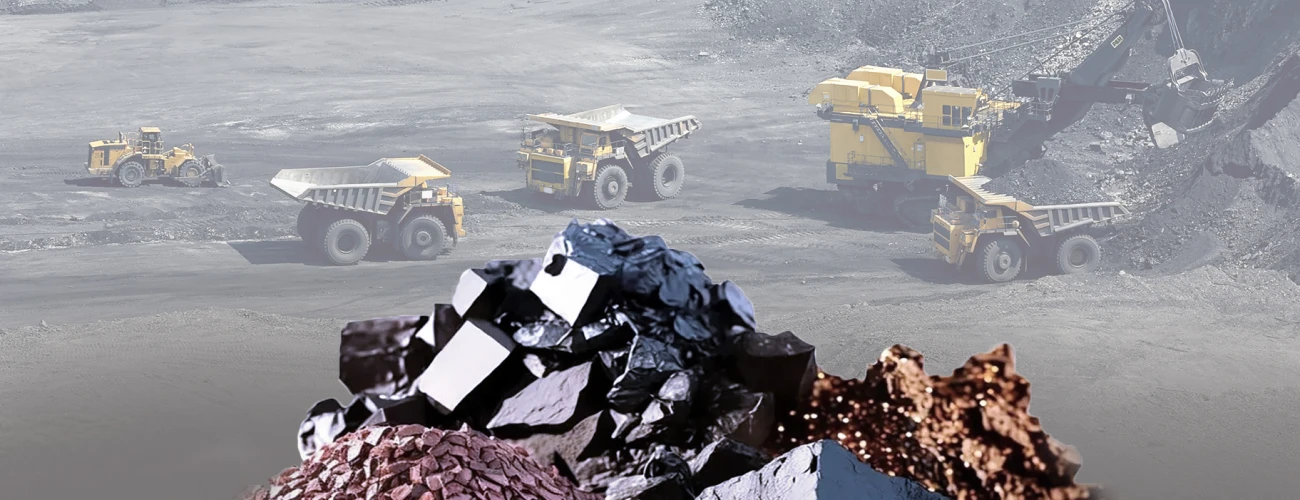
Recent geopolitical developments have made it clear that critical minerals have become one of the most strategic battlegrounds in the global economy. Access to these materials is no longer purely an economic issue it is now directly linked to national security, advanced technologies, and the future of industrial systems.
From energy transition metals to rare earth elements, control over mineral supply chains is rapidly reshaping global power dynamics.
Venezuela and the Strategic Importance of Mineral Resources
Venezuela holds significant reserves of critical minerals, including coltan (tantalum-bearing ore), gold, and iron, despite the decline in its mining output over recent decades.
These materials are essential for:
- Advanced manufacturing
- Clean energy technologies
- Defense and aerospace industries
Explore global metallic materials and available supply opportunities
Supply Chain Control and China’s Dominance
China’s dominance in the critical minerals supply chain, particularly in rare earth processing, represents a major strategic risk for Western economies.
- ~74% of rare earth imports into the U.S. come from China
- ~90% of midstream processing capacity is concentrated there
This concentration has forced governments to rethink sourcing strategies and invest in diversified supply chains for critical metals and industrial minerals.
Critical Minerals as the “New Oil”
Critical minerals are increasingly viewed as the “new oil” of the global economy. Governments worldwide are developing strategies to secure long-term access to materials such as:
- Lithium
- Copper
- Tantalum
- Rare earth elements
These resources are essential for electrification, renewable energy, and next-generation technologies.
Explore available copper and critical mineral supply listings
The UK’s Critical Minerals Strategy: Vision 2035
The UK’s Vision 2035 strategy highlights the rapid growth in demand for critical minerals, with projections such as:
- Lithium demand increasing by over 1100%
- Greater emphasis on recycling and domestic production
- Reduced dependency on single-country supply chains
This reflects a broader global trend toward supply chain resilience and diversification.
Implementation Challenges and Financing Gaps
Despite strong strategic frameworks, execution remains a major challenge.
Limited funding, particularly in midstream processing, creates barriers for scaling projects. Many critical mineral initiatives struggle to move from development to commercial production due to financing gaps.
This creates opportunities for private sector platforms and trade ecosystems to facilitate connections between buyers, suppliers, and investors.
The Role of Technology in Supply Chain Resilience
Advanced processing technologies play a crucial role in strengthening mineral supply chains.
The ability to convert raw materials into high-value metals and alloys is essential for:
- Semiconductor manufacturing
- Aerospace and defense
- Nuclear and energy systems
Technology-driven supply chains are becoming a key differentiator in global competitiveness.
Conclusion
The global competition for critical minerals is entering a new phase. Countries that successfully build resilient, diversified, and technology-driven supply chains will gain a strategic advantage in the evolving global economy.
Platforms like B2BMineral enable market participants to access structured supply opportunities and connect across the global mineral ecosystem.
Visit B2BMineral to explore global mineral trade opportunities
https://www.globalminingreview.com/news/






.j_s_thumb.webp)